
Roof Rat & Pack Rat Control in Scottsdale, AZ
- Pest Control Service in Scottsdale
- Bark Scorpion Control
- Scorpion Exclusion & Weep-Hole Sealing
- Subterranean Termite Inspection & Treatment
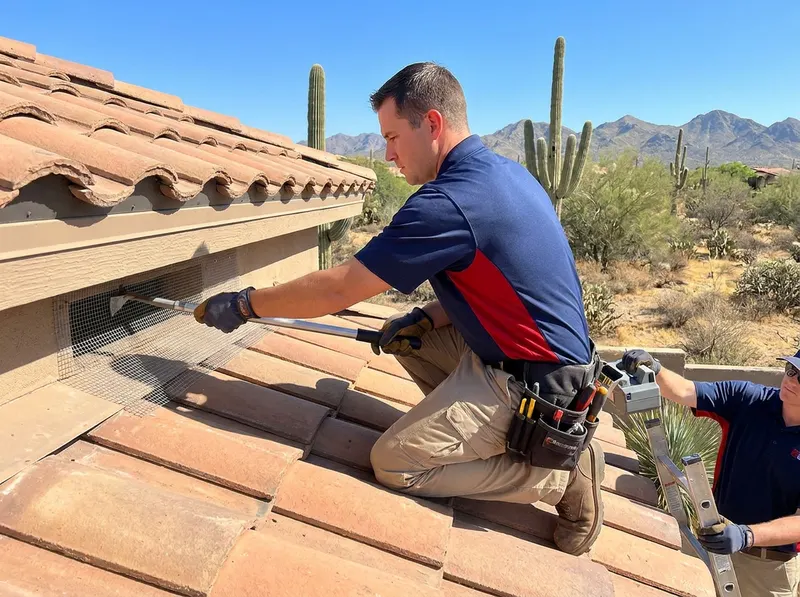
- Included: attic and roofline inspection, exterior entry-point mapping, trap placement, follow-up visits to clear traps, and a written list of the openings that need sealing.
- Timing: inspection and first trap set usually happen in one visit; most Scottsdale attic activity quiets within 1–3 weeks of trapping, depending on how many rodents and how many entry points exist.
- Cost: rodent work in Scottsdale typically starts at $250 for inspection plus initial trapping, with exclusion sealing quoted separately by the number and type of openings — every figure here is a ballpark, exact price confirmed on a free on-site visit.
- We handle: roof rats in attics, garages and soffits; pack rat middens under sheds, patios, pool equipment and yard debris; nesting material removal and droppings cleanup where access allows.
- Booking: call or text (520) 677-2776 with what you heard or found — scratching overhead at night, droppings on the garage shelf, a stick pile against the block wall — and we schedule an inspection.
Roof rats are firmly established along Scottsdale's irrigated, mature-landscape corridors — the older blocks in Village Grove and near Old Town, the lake-and-lawn neighborhoods of McCormick Ranch and Scottsdale Ranch, and the citrus-heavy yards around Gainey Ranch. The pattern repeats: a fruiting citrus or a dense oleander hedge touches the roof, rats use it as a bridge, and they slip under the barrel tile at the fascia or through an unscreened gable or dryer vent. <strong>If you hear running or gnawing overhead between dusk and 2am, you have roof rats, not mice.</strong> Along the Indian Bend Wash Greenbelt, the greenbelt vegetation and adjacent irrigation give them a year-round travel and water route, so a single property fix works best when the roofline itself is closed rather than just the yard cleaned up.
Pack rats are a different animal with a different treatment plan. On desert-edge lots in DC Ranch, Grayhawk, McDowell Mountain Ranch, Troon North and Desert Highlands — anywhere natural desert backs up to the McDowell Sonoran Preserve or the washes below Pinnacle Peak Park — woodrats collect cactus joints, sticks, wire, and shiny debris into a midden and defend it. <strong>Removing the midden is the core of pack rat control, because the nest itself is what draws the next rat to the same spot.</strong> Middens under pool pumps, casitas, decorative boulders and parked vehicles are the ones that turn into chewed irrigation lines and chewed wiring harnesses.
Here is the honest decision fit. <strong>Trapping alone makes sense when the entry is already sealed or when a single rodent got in through a door left open</strong> — it is the cheaper, faster path. <strong>Trapping plus exclusion makes sense any time rodents reached an attic</strong>, because an attic means a permanent opening, and an opening left alone will be found again during the fall nesting push when overnight temperatures drop. The trade-off is real money: sealing a tile roofline, screening vents and closing fascia gaps costs more than a trap program, and it is the part that ends the cycle instead of pausing it. That is why we inspect and price the openings up front instead of selling recurring visits and hoping the noise stops.
We do not scatter loose rodenticide in attics or open yards where children, dogs, and Scottsdale's owls, hawks and coyotes hunt. <strong>Snap traps in protected placements and physical exclusion do the work; any bait use is tamper-resistant, disclosed to you, and placed where non-target animals cannot reach it.</strong> You will be told what is being set, where it is, and when we return. There is no requirement to sign a 12-month agreement to get a rodent problem handled — some homes want ongoing exterior rodent monitoring, especially properties bordering the Preserve or a wash, and that is a choice you make after the initial work, not a condition of it. Landlords and short-term-rental managers in the 85251–85266 corridor can ask for the same sequence on a tighter schedule when a guest or tenant is arriving. Call (520) 677-2776. Sealed out, not just sprayed down.
Call (520) 677-2776Roof Rat & Pack Rat Control pricing in Scottsdale
| Rodent inspection with attic and roofline check, plus initial trap set | $250–$400 |
| Multi-visit roof rat trapping program (trap monitoring and removal) | $350–$750 |
| Pack rat midden removal and site cleanout (shed, patio, pool equipment area) | $275–$650 |
| Vent screening and small entry-point sealing (dryer, gable, plumbing penetrations) | $300–$800 |
| Tile roofline / fascia exclusion, priced by linear footage and access | $650–$2,500+ |
| Attic nesting material and dropping cleanup where access allows | $300–$900 |
| Exterior rodent monitoring visit (optional, after initial work) | $250 minimum per visit |
Exact price confirmed free on-site before any work.
Roof Rat & Pack Rat Control — questions, answered
How do roof rats get into Scottsdale attics?
Roof rats enter Scottsdale attics at the roofline — under barrel tile at the fascia, through unscreened gable and dryer vents, at plumbing and A/C penetrations, and where a soffit meets the wall. They reach the roof by climbing citrus trees, oleander hedges, unskirted palms, bougainvillea and block walls, so trimming vegetation back from the roof edge is part of every fix.
What is the difference between a roof rat and a pack rat in Scottsdale?
Roof rats climb and nest high — attics, soffits, garage rafters — and are most common in Scottsdale's older irrigated neighborhoods with mature citrus, such as Village Grove, McCormick Ranch and Gainey Ranch. Pack rats (white-throated woodrats) stay at ground level and build visible stick-and-cactus middens under sheds, patios, pool equipment and vehicles, most often on desert-edge lots in DC Ranch, Troon North, Grayhawk and Desert Highlands.
Do you use poison bait for rodent control in Scottsdale homes?
We do not scatter loose rodenticide in Scottsdale attics or open yards, because owls, hawks, coyotes, dogs and cats hunt or scavenge there. Trapping in protected placements plus physical exclusion is the primary method; if any bait is used it goes in tamper-resistant stations, in locations disclosed to you before we leave.
Why do rats keep coming back to my Scottsdale house after trapping?
Rats return to Scottsdale homes when the entry point is still open. Trapping removes the current animals; an unsealed tile roofline, vent or fascia gap simply invites the next rat traveling the same citrus canopy, block wall or greenbelt corridor. Sealing the openings is the step that ends the pattern, which is why our inspection ends with a written list of what needs closing.
When are roof rats and pack rats worst in Scottsdale?
Roof rat activity in Scottsdale climbs in fall and winter as overnight temperatures drop and rodents move into attics to nest, and again when citrus fruit ripens and gives them a food source at roof height. Pack rat middens build year-round on desert-edge lots near the McDowell Sonoran Preserve and the washes below Pinnacle Peak Park, and are often discovered when irrigation lines or vehicle wiring get chewed.